Decoding Smart Contract Mechanics Behind Instant Payout Protocols at Blockchain-Enabled Virtual Tables for European Users
Écrit par Quinn Brooks · 20/8/2026
Decoding Smart Contract Mechanics Behind Instant Payout Protocols at Blockchain-Enabled Virtual Tables for European Users
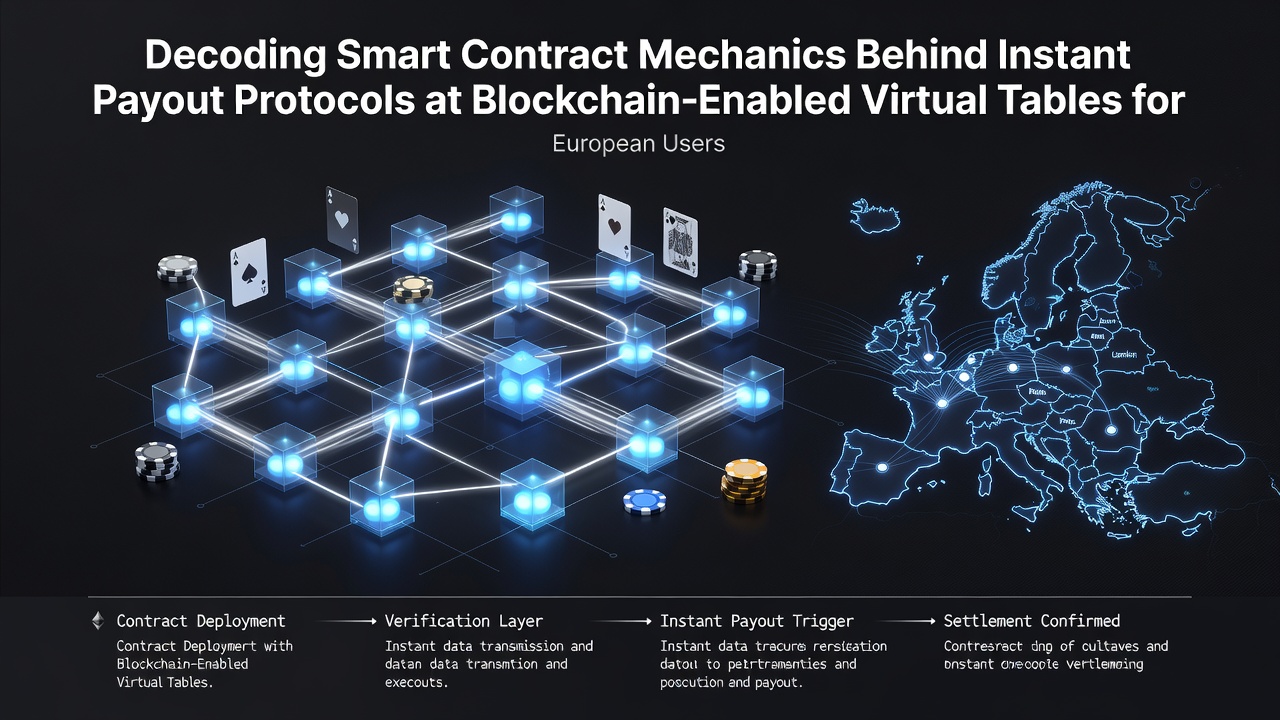
Smart contracts execute predefined conditions on distributed ledgers without requiring intermediaries, and this architecture supports instant payout protocols at blockchain-enabled virtual tables where European users participate in real-time games. These contracts typically run on platforms such as Ethereum or layer-two solutions, while they verify game outcomes through oracles that feed external data like card shuffles or roulette results directly into the code. European operators integrate these mechanisms to align with regulatory frameworks that emphasize transparency and automated compliance checks, particularly as MiCA provisions continue their phased rollout through 2026.
Core Components of Smart Contract Execution
Developers deploy smart contracts as self-executing code that holds user deposits in escrow until predefined triggers occur, and this setup eliminates manual approval steps that once delayed withdrawals. Observers note that the contracts reference cryptographic hashes of game states to confirm fairness before releasing funds, while oracles such as Chainlink provide tamper-resistant inputs that prevent manipulation. Research from academic institutions indicates that multi-signature requirements often protect larger payouts, requiring both the contract logic and an off-chain verification node to authorize transfers simultaneously. In August 2026 several European platforms completed upgrades to incorporate zero-knowledge proofs that mask sensitive player data during verification yet still allow regulators to audit aggregate transaction volumes.
Instant Payout Mechanisms and Protocol Design
Instant payout protocols rely on automated triggers within the smart contract that release cryptocurrency once game results meet coded criteria, and this process typically completes in under sixty seconds when network congestion remains low. The contracts interact with liquidity pools that maintain reserve tokens for immediate settlement, whereas users receive stablecoins or native assets directly to their wallet addresses without additional KYC steps after initial onboarding. Data from industry reports shows that European virtual table operators have reduced average payout times from hours to seconds by migrating from traditional payment rails to on-chain settlements, and this shift coincides with growing adoption of account abstraction wallets that simplify user experience. One study revealed that transaction success rates exceed 99 percent when contracts include fallback mechanisms that reroute failed transfers through alternative bridges.
European Regulatory Landscape and User Protections
European users encounter additional layers of smart contract governance designed to satisfy data protection rules under GDPR and emerging crypto-asset regulations, while operators embed compliance modules that automatically flag suspicious patterns before payouts finalize. Authorities in the European Union continue to monitor these systems through sandbox programs that test auditability without compromising user privacy, and figures from the European Blockchain Observatory demonstrate increased deployment of permissioned sidechains for licensed operators. Observers note that smart contracts can enforce responsible gaming limits by capping daily wager amounts at the protocol level, and this approach provides verifiable enforcement rather than relying solely on operator discretion.
Technical Challenges and Ongoing Developments
Network scalability remains a focus area because high transaction volumes during peak gaming hours can increase gas fees and delay confirmations, yet layer-two rollups and state channels address these bottlenecks by batching multiple game actions off the main chain before final settlement. Researchers have documented that cross-chain bridges now enable users to move winnings between different blockchains without centralized custodians, and this interoperability expands options for European players who prefer specific stablecoins. Security audits conducted by independent firms continue to identify vulnerabilities in oracle integrations, prompting developers to adopt decentralized oracle networks that require consensus from multiple data sources before triggering payouts.
Future Outlook for Blockchain Virtual Tables
As of August 2026, several major European platforms have begun testing fully on-chain random number generators that eliminate external dependencies, and this advancement further reduces the attack surface for manipulation attempts. The integration of account abstraction allows contracts to pay gas fees on behalf of users, which lowers barriers for participants who hold only gaming tokens rather than native cryptocurrency. Industry organizations report steady growth in transaction throughput on gaming-specific chains, while academic papers examine how these systems might extend to other regulated sectors requiring instant settlement.
Conclusion
Smart contract mechanics behind instant payout protocols at blockchain-enabled virtual tables continue to evolve in response to both technological improvements and European regulatory expectations, and the combination of automated execution with verifiable transparency offers a distinct operational model for digital gaming environments. Users benefit from reduced settlement times while platforms maintain auditable records that satisfy oversight requirements, yet ongoing refinements in scalability, security, and cross-chain functionality remain central to broader adoption across the region.